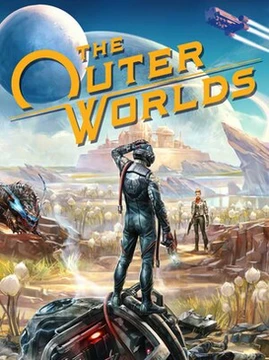
Samson
A fan-created character with no appearance in The Outer Worlds.

Samson is not a character that appears in The Outer Worlds. There is no physically augmented heavy combatant by that name in any settlement on Halcyon.
- Role
- None (Non-canon)
- Affiliation
- None
- First Appears
- Nowhere (Does not exist in the game)
- Status
- Not applicable
- Specialty
- None
- Key Trait
- None
Lore & Background
Samson has no presence in The Outer Worlds. There is no former HHC heavy laborer or security asset with this name, nor any companion with a backstory of breaking free from corporate control and being recruitable via a personal quest. The character described is entirely fan-created and does not exist within the game's canon.
In Their Own Story
Samson Agonistes draws on the story of Samson from the Old Testament, Judges 13–16; in fact it is a dramatisation of the story starting at Judges 16:23. The drama starts in medias res. Samson has been captured by the Philistines, had his hair, the container of his strength, cut off and his eyes cut out. Samson is "Blind among enemies, O worse than chains" (line 66). Near the beginning of the play, Samson humbles himself before God by admitting that his power is not his own: "God, when he gave me strength, to show withal / How slight the gift was, hung it in my hair" (lines 58–9). The Chorus discusses Samson's background and describes his various military accomplishments: "Ran on embattled armies clad in iron, / And, weaponless himself, / Made arms ridiculous, useless the forgery / Of brazen shield and spear, the hammered cuirass, / Chalybean-tempered steel, and frock of mail / Adamantean proof; ... Then with what trivial weapon came to hand, / The jaw of a dead ass, his sword of bone, / A thousand foreskins fell" (lines 129–134, 142–4). Although he is great, the Chorus points out that, through his blindness (actual and metaphorically), he is a prisoner: "Thou art become (O worst imprisonment!) / The Dungeon of thy self; thy soul / (Which men enjoying sight oft without cause complain) / Imprisoned now indeed, / In real darkness of the body dwells, / Shut up from outward light / To incorporate with gloomy night / For inward light alas / Puts forth no visual beam" (lines 155–163). Samson reveals how he lost his power because of his desire for Delilah, and, through this act, betrayed God: "I yielded, and unlocked her all my heart, / Who with a grain of manhood well resolved / Might easily have shook off all her snares: / But foul effeminancy held me yoked / Her bond-slave. O indignity, O blot / To honor and religion! Servile mind / Rewarded well with servile punishment!" (lines 407–413). However, his state is more than just his own, and it represents a metaphor for the suffering of God's chosen people when Samson says: "Or to th' unjust tribunals, under change of times, / And condemnation of the ingrateful multitude. / If these they scape, perhaps in poverty / With sickness and disease thou bow'st them down" (lines 695–698). After Samson rejects Dalila's pleas, she asks for Samson to "let me approach at least, and touch thy hand" (line 951), and Samson responds, "Not for thy life, lest fierce remembrance wake / My sudden rage to tear thee joint by joint" (lines 952–3). He shows Dalila how not to upset him: "At distance I forgive thee, go with that" (line 954). The Chorus, shortly after, complains about the nature of women and how deceptive they are: "Whate'er it be, to wisest men and best / Seeming at first all heavenly under virgin veil, / Soft, modest, meek, demure, / Once joined, the contrary she proves, a thorn / Intestine, far within defensive arms / A cleaving mischief, in his way to virtue / Adverse and turbulent, or by her charms / Draws him awry enslaved / With dotage, and his sense depraved / To folly and shameful deeds which ruin ends" (lines 1034–1043). Harapha points out that Samson is "... no worthy match / For valor to assail, nor by the sword / Of noble warrior ... / But by the barber's razor best subdued" (lines 1164-7). But he does describe Samson's past accomplishments when he says "thou art famed / To have wrought such wonders with an ass's jaw" (lines 1094–5). The Chorus discusses how God grants individuals with the power to free his people from their bonds, especially through violent means: "He all their ammunition / And feats of war defeats / With plain heroic magnitude of mind / And celestial vigor armed; / Their armouries and magazines contemns, / Renders them useless, while / With winged expedition / Swift as the lightning glance he executes / His errand on the wicked, who surprised / Lose their defence, distracted and amazed" (lines 1277–86). The last two hundred and fifty lines describe the violent act that actually occurs while the play was unfolding: Samson is granted the power to destroy the temple and kill all of the Philistines along with himself. However, this event does not take place on stage but is told through others. When the temple's destruction is reported, there is an emphasis on death and not peace: "Man. I know your friendly minds and – O what noise! / Mercy of Heav'n, what hideous noise was that! / Horribly loud, unlike the former shout. / Chor. Noise call you it, or universal groan, / As if the whole inhabitation perished? / Blood, death, and dreadful deeds are in that noise, / Ruin, destruction at the utmost point. / Man. Of ruin indeed methought I heard the noise. / Oh it continues, they have slain my son. / Chor. Thy son is rather slaying them; that outcry / From slaughter of one foe could not ascend. / Man. Some dismal accident it needs must be; / What shall we do, stay here or run and see? / Chor. Best keep together here, lest running thither / We unawares run into danger's mouth. / This evil on the Philistines is fall'n; / From whom could else a general cry be heard?" (lines 1508–24). Manoah describes the event as "Sad, but thou know'st to Israelites not saddest / The desolation of a hostile city" (lines 1560–1). The final lines describe a catharsis that seems to take over at the end of the play: "His servants he with new acquist / Of true experience from this great event / With peace and consolation hath dismissed, / And calm of mind, all passion spent" (lines 1755–1758).
Reader's Guide
The Persons: Samson, Manoa the Father of Samson, Dalila his Wife, Harapha of Gath, Public Officer, Messenger, Chorus of Danites. Samson Agonistes combines Greek tragedy with Hebrew Scripture, which alters both forms. Milton believed that the Bible was better in its classical forms than those written by the Greeks and Romans. In his introduction, Milton discusses Aristotle's definition of tragedy and sets out his own paraphrase of it to connect it to Samson Agonistes: "Tragedy, as it was anciently composed, hath been ever held the gravest, moralest, and most profitable of all other poems: therefore said by Aristotle to be of power by raising pity and fear, or terror, to purge the mind of those and such-like passions, that is to temper and reduce them to just measure with a kind of delight, stirred up by reading or seeing those passions well imitated. Nor is nature wanting in her own effects to make good his assertion: for so in physic things of melancholic hue and quality are used against melancholy, sour against sour, salt to remove salt humors." Milton continues, "Of the style and uniformity, and that commonly called the plot, whether intricate or explicit... they only will best judge who are not unacquainted with Aeschylus, Sophocles, and Euripides, the three tragic poets unequaled yet by any, and the best rule to all who endeavor to write tragedy". The reliance on Hebrew Scripture allows Milton to emphasise a plot that he feels is worthy of discussion, while the elements of Greek tragedy allows Milton to deal with complex issues through use of choruses and messengers instead of directly depicting them in addition to softening the Hebrew characters. This merging of two forms alters Samson from a rough barbarian into a pious warrior of God. Acts of violence are an important theme within Samson Agonistes as the play attempts to deal with revenge and the destruction of God's enemies. Michael Lieb posits that "the drama is a work of violence to its very core. It extols violence. Indeed, it exults in violence". John Coffey simply describes the action in the play as "a spectacular act of holy violence and revenge". Likewise, David Loewenstein remarks that "the destruction and vengeance depicted in Samson Agonistes, then, dramatizes a kind of awesome religious terror". Gordon Teskey
Did You Know?
- Samson is not a canon character in The Outer Worlds.
- No settlement on Halcyon contains an NPC or companion named Samson.
- The Outer Worlds does not feature a companion with the described backstory of being a former HHC heavy laborer/security asset who broke free and can be recruited via a personal quest.
- All details about Samson's physical modifications, role, and recruitment are entirely non-canonical.
More in Characters & NPCs
Elsewhere in the The Outer Worlds universe
Spotted an error? Know more?
This is a living reference — every entry is fact-audited, and reader corrections feed straight into our audit queue. Suggest an edit · See this site's audit record