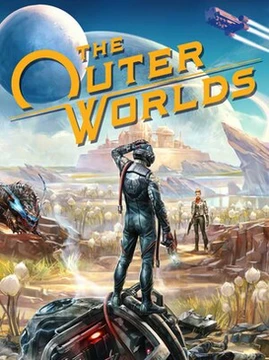
Charm
Talk your way past the barricade, haggle past the price tag, charm past the cult.

Charisma is the social and persuasive skill in The Outer Worlds, governing how your Captain navigates the politics, commerce, and interpersonal drama of the Halcyon colony. Rather than a single number, it functions as a skill tree: as you invest points, you unlock Talents that open new dialogue lines, improve barter prices, and grant you the ability to sway or intimidate NPCs who would otherwise be unreachable.
In a game where the biggest threats are as much corporate greed and religious fanaticism as alien fauna, Charisma is the tool that lets you talk your way out of a standoff, haggle a discount off a plasma rifle, or convince a cultist that their apocalyptic prophecy is, well, a bit much. It is one of the four core skills alongside Strength, Dexterity, and Intelligence, and it shapes the social face of your playthrough as much as any combat stat does.
- Skill category
- Social / Persuasion
- Primary effects
- Additional dialogue options, improved barter prices, social encounter bonuses
- Core skill count
- One of four main skills (with Strength, Dexterity, Intelligence)
- Talent progression
- Unlocks Talents at increasing skill levels
- Game
- The Outer Worlds (Obsidian Entertainment, 2019)
- Setting
- Halcyon colony ship and its surface settlements
Lore & Background
On Halcyon, words carry weight far beyond their syllables. A well-placed compliment can open a locked door in a corporate office; a sharp retort can defuse a standoff with a Monarch enforcer. The colony's social fabric is layered—Meridian's corporate managers, the Monarch's faith-driven cadres, the independent settlers of the surface, and the crew of the Unreliable all speak different registers of power. Charisma is the skill that lets the Captain read those registers and respond in kind.
Obsidian designed the skill to reward players who want to solve problems through wit, negotiation, and social pressure rather than gunfire. High Charisma doesn't make every NPC your friend, but it ensures the conversation has more possible outcomes. A low-Charisma Captain might only hear "No" from a shopkeeper; a high-Charisma Captain hears "No," "Maybe, for the right price," and "Actually, you know what, here's a discount and a story about my grandmother."
The skill also intersects with the game's faction dynamics. Whether you're mediating between the Monarch and the settlers, negotiating with Meridian's executives, or simply trying to get your crew to stop bickering in the Captain's quarters, Charisma determines how many levers you can pull in a social encounter. It is, in many ways, the skill that makes The Outer Worlds feel like a role-playing game rather than a shooter with dialogue trees.
In Their Own Story
The bar on the surface was called The Spinning Top, and the bartender had the patience of a man who had long since stopped caring. You set your plasma pistol on the counter—standard procedure, you told yourself—and ordered a drink. The bartender's eyes flicked to the weapon, then to your face, then back to the glass he was polishing.
"Captain, huh," he said. Not a question. He'd heard the rumors. Everyone on the surface had.
You leaned back. The stool creaked. Outside, the twin moons of Halcyon's orbit painted the sky in bruised purples, and somewhere in the distance a Monarch patrol drone hummed its endless hymn through the static.
"I'm not here to cause trouble," you said, and for once, you meant it. You just needed information. Names. A route through the corporate checkpoints that didn't involve a firefight.
The bartender set down the glass. Picked it back up. Set it down again.
"Everybody says that," he muttered. But his eyes were different now. Calculating. And you could feel the door in the conversation—locked, but not welded shut. All it needed was the right word, the right angle, the right little performance of honesty that made a tired man behind a bar decide that talking to you was less trouble than not.
You smiled. And the lock turned.
Reader's Guide
The Charisma skill tree in The Outer Worlds progresses through several levels, each unlocking a Talent that mechanically changes how social and economic interactions work.
At the earliest levels, you gain access to additional dialogue options in conversations. This is the core mechanical unlock: lines that are simply absent at lower Charisma become available, offering persuasion, flattery, or bluster as alternatives to combat or silence. These extra lines are essential for certain quest solutions, particularly when you need to convince an NPC to change their mind without a Strength or Dexterity check.
Mid-tier Talents focus on bartering. You get better prices when buying equipment and selling loot, which compounds over a full playthrough. This is a quiet but powerful economic advantage, especially if you're playing a build that relies on gear upgrades rather than pure skill damage.
Higher levels introduce more nuanced social tools—abilities that let you push harder in specific encounter types, whether that's intimidating a hostile party or sweet-talking a reluctant informant. These later Talents synergize well with a playstyle that avoids combat encounters entirely, letting you resolve faction disputes and quest objectives through conversation alone.
Build synergy tip: pair high Charisma with Intelligence for a "diplomat-scientist" build that can hack terminals AND talk your way past guards, or with Dexterity for a stealthy social spy who picks locks, eavesdrops, and then negotiates from a position of superior information. Avoid stacking Charisma with pure Strength builds unless you want a character who talks first and then punches—there's a fun in that, but you'll miss the subtler dialogue options that reward a more balanced social approach.
Did You Know?
- Charisma dialogue options are not just cosmetic—some quest-critical lines are completely unavailable below a certain Charisma threshold, meaning a low-Charisma player can be soft-locked out of a non-combat resolution.
- The bartering Talent's price improvement applies to both buying and selling, making it one of the most economically impactful Talents in the game over a full playthrough.
- In The Outer Worlds, the Captain's social interactions are shaped by the crew's personalities—Max, Rae, and Firebrand each react differently to your Charisma choices, adding a layer of in-crew roleplay on top of NPC dial
- The game's retro-futuristic aesthetic means that even 'persuasion' feels like a 1950s space-western: you're not hacking a firewall, you're charming a corporate rep in a pinstripe suit who's sipping a synthetic coffee in
More in Skills & Talents
Elsewhere in the The Outer Worlds universe
Spotted an error? Know more?
This is a living reference — every entry is fact-audited, and reader corrections feed straight into our audit queue. Suggest an edit · See this site's audit record