The Halcyon
A century adrift, a crew half-mad, and a stowaway who just woke up with a gun.

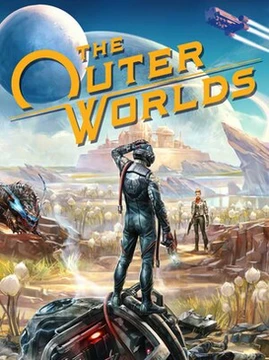
The Halcyon is the generation ship that serves as the opening setting of The Outer Worlds, a corporate-sponsored vessel launched over a century ago to carry colonists to a new world. Instead of arriving, it has drifted through the Void for generations, its crew aging, dying, and being replaced by children born aboard. The player character, a stowaway frozen in cryo-sleep since the voyage's early days, awakens to find the ship under the iron grip of a Captain who has long since lost his mind.
As both a narrative prologue and a fully explorable hub, The Halcyon introduces the player to the Union's corporate worldview, the game's party system, and the core conflict of the story. Every deck tells a slice of life aboard a slowly decaying ark, from the overgrown hydroponic garden to the sterile bridge where the Captain still barks orders at a crew that barely remembers why they're sailing.
- Type
- Generation ship / Starting location
- Role
- Opening hub, narrative prologue, first major quest area
- Affiliation
- Halcyon Corporation (a subsidiary of the Union)
- First appears
- The Outer Worlds (2019), opening sequence
- Status
- Abandoned by its original mission; under the Captain's authoritarian control
- Key figure
- The Captain (antagonist of the opening arc)
Lore & Background
The Halcyon was commissioned by the Halcyon Corporation, a subsidiary of the Union, as a one-way generation voyage to establish a new colony beyond the settled systems. The ship was designed to carry hundreds of passengers in cryo-sleep while a small active crew maintained the vessel across the decades. The plan was elegant in theory: launch, drift, arrive, thaw, build. In practice, the destination never materialized. The ship simply kept going, year after year, its corridors filling with the quiet routines of people who had forgotten what a surface looked like.
Over the course of its long drift, the crew grew old and was succeeded by children born in the ship's cramped quarters. Resources thinned. The garden became a lifeline. The chapel became a comfort. And the Captain, once a competent officer, slowly unraveled under the weight of endless responsibility and the silence of the Void. By the time the stowaway wakes from cryo, the Captain has declared himself the sole authority aboard, hoarding supplies, silencing dissent, and treating the remaining crew as his personal court. The ship is less a vessel now than a closed society with one very bad king.
For the player, The Halcyon is a tutorial in the game's philosophy: a small, contained world where every NPC has a story, every room has a secret, and every choice ripples outward. It is also a tonal anchor, blending the absurd corporate-bureaucratic humor of the Union with genuine pathos about isolation, purpose, and what it means to be stranded with people you chose—or who chose you.
In Their Own Story
The cryo-pod hisses open and the first thing you notice is the smell—recycled air with a faint sweetness, like overripe fruit left in a sealed room. Your joints ache. Your mouth tastes like copper. A young woman in a stained crew jacket is already at the pod's console, tapping it with a wrench, muttering that the thaw cycle is 'a little aggressive today.'
'You're the stowaway,' she says. Not a question. 'The Captain's been talking about you for, what, forty years? You'd think he'd have a better chair for the throne.' She gestures vaguely toward the far end of the bay, where a long corridor stretches into half-light. Somewhere ahead, a radio crackles with the Captain's voice, barking at someone about rationing. The garden's green glow pulses through a grated window overhead, and for a moment the whole ship feels less like a machine and more like a held breath.
You pull a pistol from the pod's side rack. It's warm. It's yours. The woman shrugs. 'Welcome aboard. Try not to wake the Captain. He's in a mood, and the last person who argued with him is in the med bay. As a lesson.'
Reader's Guide
The Halcyon reads as a lived-in, slightly decaying mid-century spacecraft: brushed metal panels, rounded bulkheads, warm amber and teal lighting, and the constant hum of life-support. The aesthetic is corporate-practical with a touch of 1970s optimism—think a space-age office park that's been left running too long.
Major areas to explore include the Cryo Bay (your starting point and the site of the opening confrontation), the Mess Hall (a communal dining space with a kitchen and a few hidden supply stashes), the Garden (a hydroponic deck that doubles as a quiet refuge and a key resource source), the Chapel (a small, reverent space with lore-adjacent dialogue), the Armory (where you can upgrade your gear and find hidden weapon caches), the Med Bay (treatment, lore logs, and a few unsettling patient files), the Engineering section (puzzle-adjacent interactions and maintenance puzzles), and the Bridge (the Captain's domain and the climax of the opening arc).
Factionally, the area is controlled by the Captain and his small circle of loyalists. The player operates as an outsider with no pre-existing allegiance, which keeps the tone personal rather than factional. Environmental hazards are minimal—no hostile wildlife or radiation—but the Captain's authority, limited ammo, and a few locked or booby-trapped rooms create the primary traversal friction. A few hidden caches (extra credits, rare items, lore notes) are tucked behind panels, in the garden's soil, and in the chapel's storage alcoves.
Did You Know?
- The Halcyon was never meant to be a permanent home; it was a one-way transport whose destination effectively vanished from the map, turning a delivery vehicle into a closed society.
- The player character is a stowaway, meaning they were never officially part of the crew roster—a detail that shapes how the Captain and other NPCs react to their presence.
- The ship's garden is not just set dressing; it functions as a narrative and mechanical resource, reflecting how the crew has had to become self-sufficient over generations.
- The Halcyon's design deliberately evokes the feel of a small, contained community rather than a vast starship, reinforcing the game's theme of interpersonal stakes over galactic spectacle.
More in Planets & Locations
Elsewhere in the The Outer Worlds universe
Spotted an error? Know more?
This is a living reference — every entry is fact-audited, and reader corrections feed straight into our audit queue. Suggest an edit · See this site's audit record