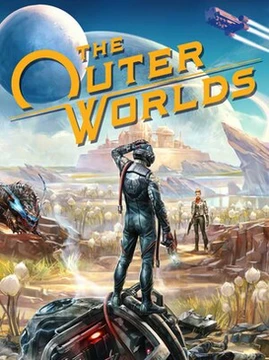
The Union Government
Where the ink on the charter meets the dust of a colony that never quite made it.

The Union Government is the central political authority of the Union, the interstellar colony that forms the primary setting of The Outer Worlds. Composed of elected and appointed officials, it administers law, resource allocation, and diplomatic relations across the colony's settlements from its seat in the Union Capitol. It represents the institutional face of the Union's founding ideals—order, collective governance, and the promise that the colony would be a society built on principle rather than mere survival.
In the player's experience, the Union Government functions as one of the major power structures to negotiate with, support, or undermine. Their quests and political machinations thread through the colony's broader conflicts, and the player's choices can reshape who holds the levers of power in the Union's halls.
- Type
- Political governing body
- Seat of power
- Union Capitol
- Jurisdiction
- The Union colony
- Role in game
- Major faction / political authority
- Player interaction
- Quest-giver, ally, or antagonist depending on choices
- First appears
- Early game, Union Capitol area
Lore & Background
The Union began as a political movement and, eventually, a governing body that organized the mass exodus of colonists away from a failing Earth. Its charter promised a society of mutual cooperation, shared governance, and the rejection of the corporate hierarchies that had hollowed out the old world. The colony that becomes the stage for The Outer Worlds is the physical embodiment of that promise—or, depending on who you ask, its slow unraveling.
The Union Government operates from the Capitol, a district that carries the weight of institutional memory. Its corridors are lined with the trappings of legitimate governance: council chambers, administrative offices, and the quiet bureaucracy of a society trying to hold itself together across the void. Over the years since the colony's founding, the Government has become entangled in the very tensions it was meant to resolve—resource scarcity, factional rivalry, and the constant pressure of a population that wants answers while the machinery of the colony grinds on.
What makes the Union Government distinctive in the broader landscape of the colony is its insistence on legitimacy. Where the Monarchies rule through tradition and the Makers through faith, the Government claims its authority from the consent of the governed and the letter of the founding charter. That claim is both its greatest strength and its most vulnerable point, because in a colony where survival often outranks procedure, the question of who truly has the right to govern never fully goes away.
In Their Own Story
The fluorescent panels in the Capitol's east corridor flicker in a slow, arrhythmic pulse, casting the council chamber in bands of pale blue and shadow. A mid-level clerk sets down a stack of requisition forms—water reclamation quotas for the agricultural terraces, signed in triplicate—and exhales a breath she's been holding since the last session. Outside the reinforced glass, the colony stretches out under a sky that is never quite the right color for sunset. Somewhere beyond the Capitol's perimeter, a faction is making moves that will make all of this paperwork feel quaint by morning. She smooths the top form, aligns it with the edge of the desk, and waits for the next order to come down the chain. The Union endures. Bureaucracy, she has learned, is the colony's quietest form of hope.
Reader's Guide
The Union Government's ideology centers on institutional legitimacy, collective governance, and the maintenance of order through established political process. In the game, they serve as the face of the colony's political establishment, offering quests that range from diplomatic mediation to suppressing dissent, and they represent the player's opportunity to work within (or against) the system.
Their seat of power is the Union Capitol, and their influence extends across the colony's settlements. Key figures include the council members and administrative officials who populate the Capitol district. The player can choose to support the Government's initiatives—securing their position, resolving disputes in their favor, or bolstering their authority—or can actively undermine them by siding with rival factions, exposing corruption, or redirecting resources away from the Capitol.
Aligning with the Union Government tends to unlock their trust, open access to political resources, and position the player as a legitimate actor within the colony's power structure. Opposing them can lead to the Capitol becoming hostile territory, but it may open doors with other factions who see the Government as an obstacle. The path you choose shapes the political landscape the player ultimately walks through, and the colony's endgame reflects whether the old order held or broke.
Did You Know?
- The Union Government's authority is rooted in a founding charter that promised the colony would be governed by principle rather than corporate or feudal hierarchy, making it ideologically distinct from the Monarchies and
- The Union Capitol district is visually and tonally distinct from other areas of the colony, emphasizing institutional architecture, administrative spaces, and the quiet weight of bureaucratic governance.
- The player's relationship with the Union Government is not binary; the game allows for nuanced engagement where the player can help, hinder, or redirect the Government's priorities through individual quest choices.
- The Union Government represents the 'establishment' path in the colony's political landscape, and siding with them positions the player as a force for institutional continuity rather than revolution.
More in Factions & Organizations
Elsewhere in the The Outer Worlds universe
Spotted an error? Know more?
This is a living reference — every entry is fact-audited, and reader corrections feed straight into our audit queue. Suggest an edit · See this site's audit record