The Union
When the Company owns the air you breathe, the only thing left to own is each other.

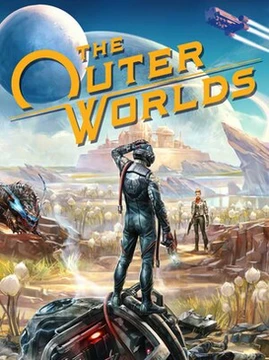
The Union is a grassroots labor organization operating out of Edgewater Station, the sprawling space-station hub at the heart of The Outer Worlds. Composed of dockworkers, engineers, miners, and other laborers who have grown sick of the Company's endless extraction of their labor for profit, the Union represents the working class's collective voice in a station where the Halcyon Corporation holds near-absolute power.
In the game's narrative, the Union serves as one of the primary factions the player can ally with, oppose, or manipulate. Their storylines center on strikes, political maneuvering, and the broader question of who truly owns the fruits of a station's labor. Whether the player sides with solidarity or corporate order, the Union's fate becomes a defining thread in the shape of Edgewater's future.
- Type
- Workers' union / labor organization
- Location
- Edgewater Station
- Primary adversary
- The Company (Halcyon Corporation)
- Ideology
- Workers' rights, collective bargaining, anti-corporate exploitation
- Player role
- Major faction – ally, neutral, or hostile depending on choices
- Territory
- Industrial and residential worker districts of Edgewater
Lore & Background
Edgewater Station was built on the backs of its workers. The Company promised opportunity, a fresh start beyond the solar system, and in return demanded every hour of every hand that kept the station's engines turning, its mines digging, and its hydroponics feeding the population. Over time the gap between the executives in their climate-controlled offices and the laborers in the smog-choked lower decks widened into a chasm. Wages stagnated while profits flowed upward. Safety protocols were treated as suggestions. And the workers, who had crossed the void to build something, found themselves treated as expendable components.
The Union was born in that resentment. It began as whispered conversations in break rooms and maintenance tunnels, a shared grievance that calcified into organization. They demanded fair contracts, representation in station governance, and an end to the Company's unilateral control over every aspect of daily life. The Company responded the way corporations do: with silence, then with pressure, then with the quiet implication that a station without its workers is a station without a future.
What makes the Union's struggle resonate is that it is not a simple good-versus-evil narrative. The Company does keep the station alive, does provide the infrastructure that makes survival in deep space possible. The Union's demands, while just, can tip a fragile ecosystem into chaos. The player is placed squarely in that tension, forced to decide whether solidarity or stability matters more, and to live with the consequences of that choice across the station's population.
In Their Own Story
The air in the lower maintenance deck tasted of recycled copper and old sweat. Mara wiped grease from her forearms and looked up at the conduit running overhead, the one the Company had flagged for 'scheduled decommission' three weeks ago. Scheduled. As if the station's life-support were a line item in a quarterly report.
She pulled the wrench from her belt and tapped it twice against the pipe. A signal. Within the hour, every worker on this deck would be standing down. No repairs. No recalibrations. No pretending the numbers on their pay stubs meant anything.
Above them, in the Company's gleaming upper levels, someone was already drafting a memo. Below, in the cramped quarters where families shared a single ventilation grate, someone was already sharpening a tool they'd never meant to use as a weapon.
Mara set the wrench down. Picked it up again. Set it down. The station hummed around her, indifferent, eternal, owned by no one and everyone at once. She began to walk toward the assembly point, and the hum felt, for the first time in years, like a question instead of a command.
Reader's Guide
The Union's ideology centers on collective labor rights, fair compensation, and the rejection of the Company's monopolistic control over Edgewater's resources and governance. In-game, they function as a quest-giving faction whose storylines test the player's moral compass: do you champion the workers who built the station, or do you side with the corporate entity that keeps it operational?
Their territory spans the industrial and residential worker districts of Edgewater, including maintenance levels, dock areas, and the lower-deck common rooms where their members gather. The Union's leader and key members are encountered throughout these areas and in their central meeting hall.
Aligning with the Union typically involves mediating labor disputes, protecting their members from Company enforcers, and supporting their political campaigns for representation. Rewards include access to worker-faction gear, discounted services from station vendors, and narrative outcomes that shift Edgewater's power balance toward the populace.
Opposing the Union means backing the Company's authority, which may require suppressing strikes, turning in Union organizers, or allowing the Company to reassert full control. This path yields Company-faction perks, higher-tier corporate equipment, and a station that remains stable but deeply unequal.
A neutral or manipulative path is also possible: playing both sides against each other, extracting resources from both, and letting the conflict burn itself out. This carries the highest risk of hostile reactions from multiple factions simultaneously but can unlock the broadest range of short-term advantages.
Ultimately, the player's final stance on the Union shapes the political landscape of Edgewater and influences which characters survive the station's endgame crisis.
Did You Know?
- The Union's conflict with the Company is not merely a side-quest thread; the player's decisions regarding labor relations ripple into multiple other faction storylines and the station's final state.
- Edgewater Station's design deliberately evokes a 1970s–80s retro-futuristic aesthetic, and the Union's industrial territory visually contrasts with the Company's sleek upper levels, reinforcing the class divide through e
- The Union's members include a diverse cross-section of station laborers—engineers, miners, dockworkers, and hydroponics technicians—making their cause a collective one rather than tied to a single profession.
- The player can choose to remain neutral between the Union and the Company, but doing so often leaves both factions in a tense, unresolved standoff that affects available dialogue and late-game options.
More in Factions & Organizations
Elsewhere in the The Outer Worlds universe
Spotted an error? Know more?
This is a living reference — every entry is fact-audited, and reader corrections feed straight into our audit queue. Suggest an edit · See this site's audit record