The Union Religion
A fellowship of the broken who refuse to kneel to the machine that made them.

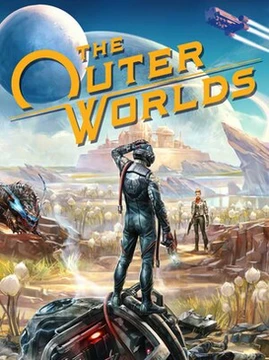
The Union is the player's starting faction in The Outer Worlds, a ragtag collective of misfits, outcasts, and idealists who reject the corporate order of the Monarch. What begins as a small crew of survivors thrown together by circumstance gradually crystallizes into a quasi-religious movement — a fellowship of the dispossessed who worship not a deity but the radical principle that ordinary people deserve autonomy, dignity, and a voice in the systems that govern their lives. Their faith is less about scripture and more about shared suffering, mutual aid, and the stubborn refusal to accept that the Monarch's version of order is the only one that matters.
In the broader world of Halcyon and its surrounding settlements, the Union occupies a complicated space: to the Monarch's enforcers they are terrorists and heretics; to the downtrodden workers, miners, and settlers they are liberators and prophets. The player, as the Union's leader, must decide whether this movement stays a scrappy resistance or calcifies into something as rigid and controlling as the corporation it opposes.
- Type
- Player-led faction / resistance movement
- Leader
- The player character (Union leader)
- Primary antagonist
- The Monarch (corporate entity)
- Primary setting
- Halcyon Station and surrounding settlements
- First appears
- Opening sequence of The Outer Worlds
- Status
- Active throughout the game; fate determined by player choices
Lore & Background
The Union was never founded in a boardroom or a chapel. It was born in the wreckage of a failed mission, in the gasping aftermath of an ambush that scattered a small crew across the void. What bound them together was not a charter or a creed but the simple, radical fact that they were still alive when the system expected them to be dead. From that shared trauma grew a fellowship: people who had been discarded by the Monarch's hierarchy and who looked at each other and saw, for the first time, that they were not less.
As the Union grew on Halcyon and in the settlements beyond, its members began to speak of their bond in spiritual language. They called their gatherings services, their shared meals communion, their collective purpose a calling. This was not organized religion in any institutional sense — there was no cathedral, no ordained clergy, no fixed liturgy. But the emotional architecture was there: a community that found meaning in mutual care, that framed resistance as a moral duty rather than a political strategy, and that treated the Monarch not merely as an enemy to be defeated but as a false god to be dethroned. The Union's 'faith' was the faith of people who had been told they were nothing and decided, collectively, that they were everything.
This spiritual dimension made the Union both more powerful and more fragile. It gave its members a courage that pure pragmatism could not, a willingness to sacrifice that no bounty could buy. But it also created tensions: what happens when the movement's leader begins to make decisions the followers did not vote for? What happens when the 'prophets' start to look suspiciously like the priests of the old order, just with different symbols on their robes? The player's choices throughout the game force them to confront whether the Union's spiritual fire is a genuine liberation or simply another hierarchy wearing a friendlier face.
In Their Own Story
The chapel was a converted cargo bay on the lower deck of Halcyon, its walls still scarred with the stenciled shipping codes of a hundred Monarch supply runs. A single lamp swung from the ceiling on a frayed cable, casting a warm amber pool over the circle of chairs — mismatched, dented, some of them still bearing the dents from the ambush. The Union sat in it, twenty-three strong, and the leader stood at the head of the circle with a glass of something that was probably not water and a face that had not slept in two days.
'They want us to be grateful,' the leader said, and the voice was quiet, which made it worse. 'Grateful that the Monarch lets us breathe. Grateful that the supply ships come on schedule. Grateful that the air recyclers don't fail, because someone up in the spire decided we were worth keeping alive.' A long silence. Then, from the back of the circle, a voice — rough, tired, the voice of someone who had spent twelve years in a mining shaft: 'And what do we say back?'
The leader looked at the lamp. Looked at the chairs. Looked at the faces that had, against every probability, chosen to be here.
'We say we remember what it felt like to be told no. And we say we remember what it felt like to say yes to each other instead.'
The lamp swung. The glass was empty. Nobody moved to refill it. They didn't need to.
Reader's Guide
The Union's ideology is rooted in collective self-determination, mutual aid, and a spiritual conviction that the Monarch's corporate order is a false god that must be dethroned. In-game, the Union functions as the player's home faction, the moral center around which the story orbits, and the faction whose fate the player ultimately shapes through dialogue choices, quest resolutions, and faction-alignment decisions.
The leader is the player character, who steps into the role after the opening ambush. Key members include the surviving crewmates who join the Union early in the game, each bringing their own skills, backstories, and loyalties. The Union's primary territory is Halcyon Station, particularly the lower decks and back-alley settlements where the Monarch's reach is thinnest, though their influence extends to the surrounding settlements as the story progresses.
Player alignment choices have significant consequences. Pushing the Union toward militant resistance can yield powerful military advantages and the loyalty of hardliners, but risks alienating moderate members and civilian allies. Steering the Union toward diplomacy and community-building strengthens settlement relationships and unlocks cooperative options, but may leave the player without the brute force needed for late-game confrontations. There is also a middle path of pragmatic leadership that balances both, though it rarely satisfies anyone fully. The Monarch's reaction to the Union's actions escalates or de-escalates accordingly, and the final confrontation's tone — and the state of Halcyon afterward — reflects the philosophical path the player chose to walk.
Did You Know?
- The Union's quasi-religious identity is expressed through the language of its members — they speak of 'calling,' 'communion,' and 'faith' rather than using purely political or military terminology, blurring the line betw
- The Union's power in the game is not fixed; it grows or shrinks based on the player's choices in dialogue and quest resolution, meaning the faction's strength at the climax is a direct reflection of how the player led it
- The Monarch's response to the Union is not a single scripted sequence but shifts in tone and intensity depending on whether the player has allied with, opposed, or balanced the corporate entity throughout the campaign.
- The Union's spiritual language is deliberately ambiguous in the game's writing — it can read as genuine faith, as political rhetoric, or as the coping mechanism of people who have been dehumanized, and the game never for
More in Factions & Organizations
Elsewhere in the The Outer Worlds universe
Spotted an error? Know more?
This is a living reference — every entry is fact-audited, and reader corrections feed straight into our audit queue. Suggest an edit · See this site's audit record