The Farm's Last Harvest
One woman, one field, and a corporation that would rather pave the dirt than let it grow.

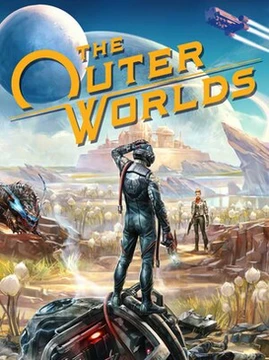
The Farm's Last Harvest is a side quest in Obsidian Entertainment's 2019 role-playing game *The Outer Worlds*, set on the sun-scorched Edgewater. It centers on the game's Farmer, a stubborn, weathered woman who has held onto a small plot of arable land against the relentless expansion of the Union megacorporation. The quest places the player directly in the tension between individual survival and corporate appetite that defines the Edgewater's political landscape.
Functionally, it serves as a character-driven interlude in the broader narrative: a chance to shape the fate of one of the Edgewater's most sympathetic independents, with consequences that ripple into faction standing and the game's multiple endings. It is one of the quests that most clearly illustrates why the Edgewater's residents resist the Union's 'helpful' takeover of every resource.
- Setting
- The Edgewater, Halcyon Station's outer ring
- Quest type
- Side quest (non-mainline)
- Primary faction
- The Farmers
- Antagonist force
- The Union (corporate)
- Player choice
- Multiple resolution paths; affects faction reputation
- Game
- The Outer Worlds (2019, Obsidian Entertainment)
Lore & Background
The Edgewater was never meant to be a thriving colony. It is a rust-streaked ring of repurposed habitat modules, salvage yards, and stubborn little enclaves where people who refused to be managed by the Union carved out a life. The farm is one of those enclaves: a patch of engineered soil under grow-lights, tended by a woman who speaks in short, practical sentences and treats the Union's 'resource optimization' proposals the way a dog treats a hand reaching for its bone.
The broader lore of the farm ties into the Edgewater's founding mythology. When the Monarch's crew first settled the ring, the Union was supposed to be a partner in logistics. Over time, the partnership curdled into ownership. Independent operators—the farmers, the scientists, the church community—found themselves squeezed into ever-narrower margins, their autonomy a theoretical right the Union could revoke with a supply cutoff. The farm is a microcosm of that struggle: a single family's livelihood versus a corporation that views soil as an inefficiency.
In the game's wider thematic architecture, the farm represents the 'small person' narrative thread that Obsidian weaves through every faction. Helping the Farmer is not just a quest tick; it is a statement about whether the Edgewater remains a place where people can own their own dirt, or whether it becomes another Union asset with a smiley-face logo on the water ration.
In Their Own Story
The grow-lights hum their low amber hymn over rows of pale stalks, and the Farmer stands at the end of the furrow with her hands still black with soil. She doesn't look up when the player's boots crunch on the gravel path. She just tilts her head, listens to the distant thrum of a Union freighter settling into the Edgewater's docking ring, and says, flatly, 'They'll be here by morning. Probably with a clipboard and a smile.'
She turns back to the crop. The stalks are thin, a little shorter than they should be. The water recycler is running at seventy percent, and the Union's 'advisory' about rationing has already cut her allocation by a third. She presses her thumb into the dirt, checks the moisture, and spits. 'Not enough,' she murmurs, as if the soil owes her an apology.
The player watches a Union drone trace a slow, lazy circle above the trellis, its little red eye blinking like a polite, patient vulture. The Farmer doesn't flinch. She has been flinching for years. Tonight, she just pulls another dead leaf from the stem and drops it in the dirt, and waits to see what the player is going to do about it.
Reader's Guide
Quest Giver: The Farmer, found at her farm plot on the Edgewater. Objective: Help the Farmer protect her crop and her land from a Union 'resource reallocation' order that will strip the farm of its water and soil rights.
Key decision points:
1. **Investigate the Union's claim.** You can visit the Union's local office or speak to their field agent to learn the legal justification. This reveals whether the order is genuine policy or a pretext for a rival bidder. Gathering evidence here strengthens your negotiating position later.
2. **Resolve the water shortage.** The farm's recycler is failing. You can repair it yourself (a skill check), scavenge parts from the salvage yard, or—less cleanly—divert water from a neighboring Union maintenance line. The diversion is faster but risks a Union security response and locks you out of a peaceful diplomatic resolution.
3. **The final confrontation.** You can: (a) present the evidence to the Union and negotiate a compromise that keeps the farm operational at reduced scale; (b) use intimidation or a combat encounter to force the Union agent to withdraw the order; or (c) side with the Union and accept the reallocation, which grants Union reputation but permanently removes the farm as an active location.
Mutually exclusive outcomes: Choosing the Union path locks the farm out of the map and prevents a follow-up dialogue with the Farmer. The compromise and intimidation paths both preserve the farm but yield different reputation shifts (Union vs. Farmers faction). None of these choices are time-sensitive in a hard sense, but delaying the quest while the Union freighter remains docked can shift the available dialogue options toward the more hostile resolution.
No other quests are hard-locked by this quest, but the Farmers faction reputation gained or lost here feeds into the game's broader ending conditions regarding the Edgewater's political status.
Did You Know?
- The farm is one of the few areas on the Edgewater where the player can see functioning, hand-tended agriculture rather than the automated hydroponics that dominate the station's interior modules, reinforcing the game's t
- The Farmer is one of the characters whose personal storyline intersects with the game's main plot: the fate of the Edgewater's independent factions collectively determines the political landscape you walk into during the
- The Union's 'resource reallocation' language used in the quest mirrors the actual corporate-speak of the game's broader narrative, where the megacorporation frames every act of displacement as a benevolent optimization,
- The grow-lit farm area uses a distinct warm amber color palette that contrasts sharply with the cold blues and sterile whites of the Union-controlled zones, a visual shorthand Obsidian uses throughout the Edgewater to si
More in Quests & Missions
Elsewhere in the The Outer Worlds universe
Spotted an error? Know more?
This is a living reference — every entry is fact-audited, and reader corrections feed straight into our audit queue. Suggest an edit · See this site's audit record